
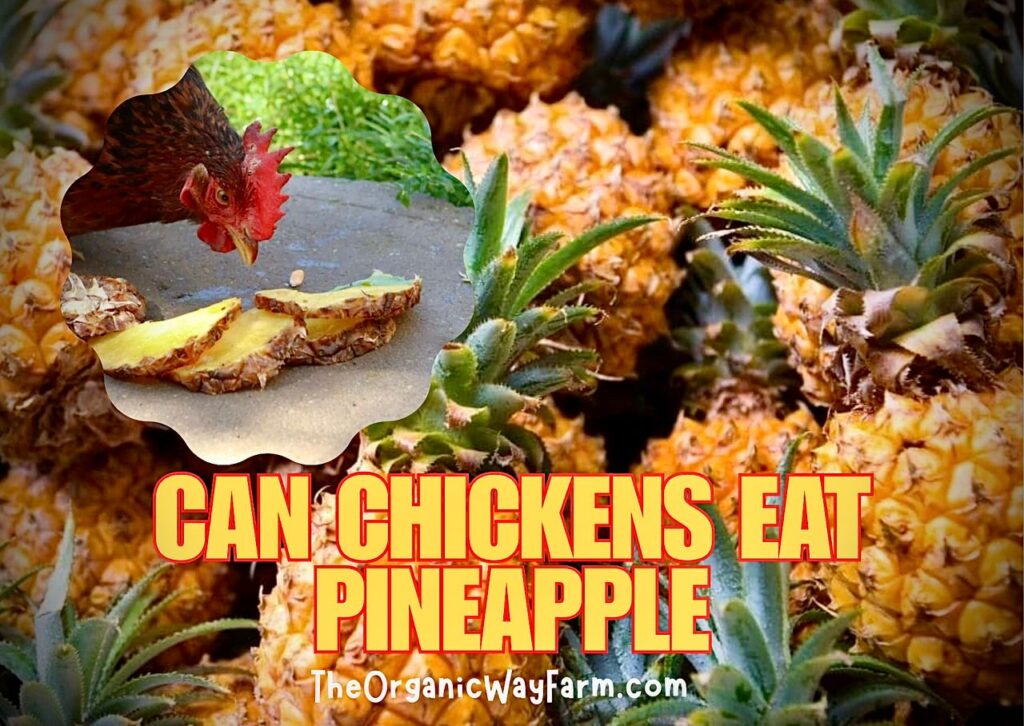
If you have some extra pineapple lying around, you’re probably wondering “Can chickens eat pineapple?” You’re not alone! Many people wonder about the safety of feeding pineapples to their feathered friends, and I’m here to share what I know.
The short answer is YES, chickens can eat pineapple, but there are some important things to consider. Pineapples can contain a lot of sugar, and not all parts of the fruit are safe for our chickens. So, how much is too much? What parts can chickens safely eat?
To gather all the answers, let’s explore this fruity subject together, focusing on the following subtopics:
- Can Chickens Eat Pineapple?
- How Much Pineapple Can Chickens Eat?
- Best Way to Feed Pineapple to Chickens
- Benefits of Feeding Pineapple to Chickens
- Risks of Feeding Too Much Pineapple to Chickens
- Substitutes for Pineapple for Chickens
Let’s jump right in!
Can Chickens Eat Pineapple?
Chickens are omnivorous, which means they enjoy a wide variety of foods. This includes fruits, vegetables, seeds, insects, and even small animals. Pineapple is a tasty fruit with a sweet flavor, and our chickens are likely to enjoy it. The juicy texture and bright color can make it an exciting treat for them, especially on a hot day.
When we consider giving pineapple to our chickens, we need to keep several factors in mind. While chickens can eat the flesh of the pineapple, we should avoid giving them the tough outer skin and the hard core. These parts can be difficult for them to digest properly.
Another point to consider is that pineapple is high in sugar. Although this high sugar content isn’t harmful in small quantities, it can lead to health issues like obesity or impacted gizzards if they consume too much. For this reason, we should treat pineapple as a snack rather than a main part of their diet.
You might also be intrested in: Can Chickens Eat Papaya?
How Much Pineapple Can Chickens Eat?
When feeding our chickens pineapple, moderation is key. It is generally recommended to feed them only a small portion of the fruit. A few small bites or pieces are sufficient for a treat. As a general guideline, we can offer pineapple once or twice a week, but this can vary depending on the age and health of our chickens.
Keep in mind that chickens thrive on a balanced diet. Their primary source of nutrition should come from high-quality poultry feed. When adding pineapple to their diet, we should ensure it doesn’t replace these vital nutrients. Instead, it should supplement their diet with vitamins.
To ensure they don’t become accustomed to the sweetness of pineapple, it’s best to mix it in with other fruits or vegetables. This way, they can enjoy the flavors while still getting a variety of nutrients. Cutting the pineapple into small, manageable pieces can make it easier for our chickens to peck at and enjoy.
Ultimately, if we notice any adverse reactions like diarrhea or changes in behavior after feeding them pineapple, we might need to stop giving it to them and consult a veterinarian. Let’s make sure we prioritize their health above all!
In conclusion, the key is to offer small, infrequent servings of pineapple to ensure that our chickens remain healthy and happy. They will appreciate the special treat, and it adds variety to their diets.
Best Way to Feed Pineapple to Chickens
Feeding pineapple to our chickens can be an enjoyable and healthy experience for them, but how we do it matters. One of the best ways to introduce pineapple into their diet is by serving it fresh. Fresh pineapple is juicy, full of flavor, and has the beneficial nutrients that our chickens need. We should cut the pineapple into small, bite-sized pieces to make it easy for them to eat.
We can also consider removing the tough outer skin and tough core. This keeps our chickens safe and allows them to focus on the softer, more digestible part of the fruit. Serving pineapple in this way not only keeps them safe but also helps them enjoy it to the fullest.
Another great idea is to mix bits of pineapple with their regular food. This will add an exciting flavor to their feed, encouraging them to eat and enjoy their meals. It can also help our chickens develop a taste for fruity treats.
If we’re feeling creative, we could even consider making a special chicken treat by mixing pineapple with yogurt or oatmeal. The chickens will likely love this combination and get added nutritional benefits. The key is to monitor portion sizes and not let these yummy mixes take the place of their essential feed.
In warm weather, a frozen pineapple treat can be a refreshing option. By freezing small chunks of pineapple in water, we create a fun and hydrating snack for our chickens on a hot day. This also promotes natural pecking behavior, keeping them engaged.
Lastly, it is essential to observe how our chickens respond to pineapple. If they seem to enjoy it and show no signs of distress, we know we are on the right track!
Benefits of Feeding Pineapple to Chickens
Hydration
Pineapple is primarily made up of water, which means it can help keep our chickens hydrated. In hot weather, hydration is especially important. When our chickens have access to juicy fruits like pineapple, they may drink less water from their water sources, helping us maintain their hydration levels. A hydrated chicken is a happy chicken!
Fiber
The fiber present in pineapple can contribute to a chicken’s overall digestive health. Fiber is important for gut health and aids in digestion. When chickens consume enough fiber, it can help prevent issues such as impacted gizzards, which can occur if they eat too many tough or hard foods. Feeding pineapple can provide the extra fiber they need while adding a delightful treat.
Vitamins and minerals
Pineapple is rich in several vitamins and minerals, including vitamin C and manganese. Vitamin C serves as an antioxidant and helps boost the immune system of our chickens. A strong immune system is vital to keeping them healthy and resistant to diseases. Manganese is necessary for bone health and supports the proper function of metabolic processes.
Mental stimulation
Introducing a variety of foods, like pineapple, can provide our chickens with mental stimulation. Chickens are curious creatures, and offering them different treats enables them to explore and interact with their environment. This not only keeps them engaged and happy but also encourages their natural foraging instincts.
Nutritional breakdown of grapes
While we focus on pineapple, it is also beneficial to remember that our chickens can enjoy various other fruits. Grapes, for instance, are another juicy fruit worth discussing. Grapes offer hydration, vitamins, and fiber as well. By mixing different fruit options into our chickens’ diets, we keep their meals exciting and healthy. However, it is essential not to overdo it since grapes also contain sugars.
Risks/Dangers of Feeding Too Much Pineapple to Chickens
While pineapple can provide several benefits to our chickens, it is not without its risks. One of the main concerns with pineapple is its high sugar content. Feeding our chickens too much sugar in the form of fruits can lead to health issues, including obesity and upset stomachs. Chickens are not built to handle large amounts of sugary foods, and too much can interfere with their overall health.
Additionally, as mentioned earlier, the tough outer skin and core of the pineapple should never be fed to chickens. These parts can pose choking hazards or lead to digestive problems. Ensuring that we only serve the soft, fleshy parts plays a crucial role in keeping them safe.
Also, new foods can sometimes cause digestive issues as our chickens’ bodies adjust to what they’re used to. It’s key to introduce pineapple slowly, monitoring for any signs of discomfort. If they seem to have trouble or develop diarrhea after consuming pineapple, we need to stop giving it to them and consult with a veterinarian.
Excess sugar can result in a condition called fatty liver disease, which can be dangerous for chickens. Likewise, too many sugary foods can impact their egg production and lead to inferior egg quality. Hence, we should tread carefully when introducing this sweet fruit into their diets.
In summary, moderation is the essential rule when feeding our chickens pineapple. A treat once in a while can be beneficial, but let’s always serve responsibly to avoid any unwanted side effects.
Substitutes for Pineapple for Chickens
If pineapple does not seem like the right fit for our chickens, a world of other fruit options is available. Fruits such as melons, apples, bananas, or berries can serve as excellent alternatives. Each fruit offers its set of vitamins and minerals, making them fantastic for the health of our chickens.
Melons, for example, are also hydrating and perfect during hot weather. Likewise, berries provide antioxidants and are generally lower in sugar but still sweet enough to be enticing for our feathered friends. Apples are easy to prepare, and many chickens enjoy pecking at them.
By rotating different fruits throughout the week, we can keep their diet varied. This supplement helps maintain their dietary balance while also encouraging their natural foraging instincts. Mixing different fruits not only adds excitement to their meals but can also provide them with different essential nutrients.
It’s worth noting that some fruits should be avoided altogether since they may cause harm. Fruits such as avocados can be toxic to chickens, so it’s crucial to educate ourselves about safe options.
Our goal should be to provide our chickens with the best nutrition while keeping them safe and healthy. Whenever we introduce a new food type, we should approach it with care. This ensures our chickens have enjoyable and healthy mealtimes.
Frequently Asked Questions
Is pineapple safe for baby chicks?
Baby chicks have more sensitive stomachs than adult chickens. We should avoid feeding them pineapple until they are a bit older and can handle such treats. If we decide to introduce pineapple, it should be in very small amounts and only when they are at least a few weeks old.
Can pineapple help with chicken illnesses?
Pineapple contains bromelain, which may help with inflammation. While it can support their overall health as part of a balanced diet, we should not rely on it solely to treat illnesses. Consulting a veterinarian is essential for any health concerns.
How can I tell if my chickens like pineapple?
Chickens can be quite expressive! If they eagerly peck at the pineapple or come back for more, they likely enjoy it. If they show disinterest or walk away, they may not find it appealing.
Can I feed my chickens dried pineapple?
While dried pineapple may seem like a convenient option, it often contains added sugars or preservatives that can be harmful. It’s best to provide fresh pineapple rather than dried.
What other fruits can chickens eat?
Chickens can enjoy a variety of fruits, including melons, apples, blueberries, strawberries, and bananas. Each offers different nutritional benefits, so mixing up their fruit sources can be beneficial.
Final Thoughts
Pineapple can be a delightful treat for our chickens, offering hydration, fiber, and essential vitamins. By being mindful of portion sizes and ensuring proper feeding practices, we can share this juicy fruit with our flocks without causing harm. Keeping our chickens’ health as a priority should always guide us as we explore new foods together.
If you’re looking for more insights on what other tasty treats you can offer, check out our guide on chickens and grapes. Learning what our chickens can safely enjoy is a rewarding journey!